The TVG

The Tatun Volcano Group

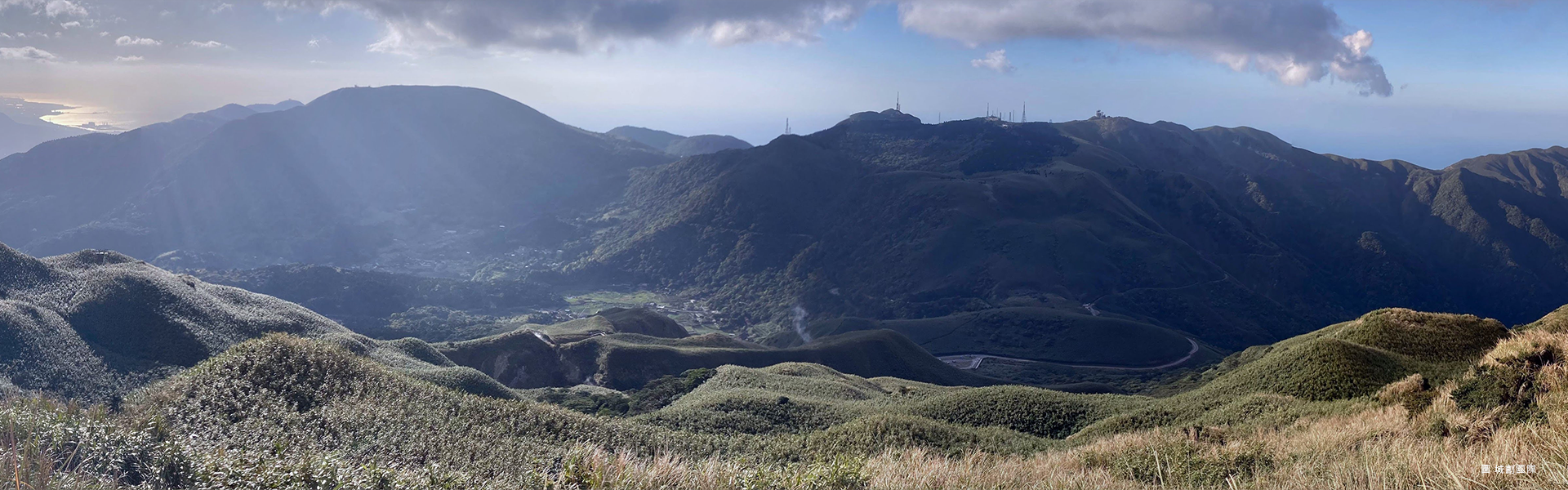
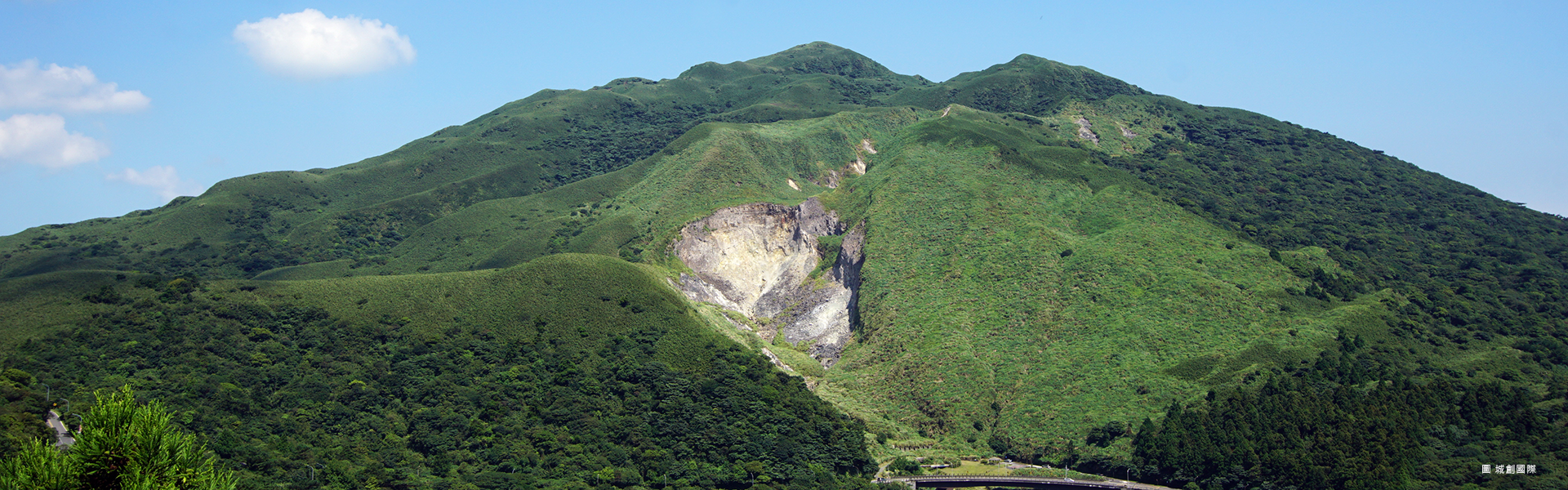
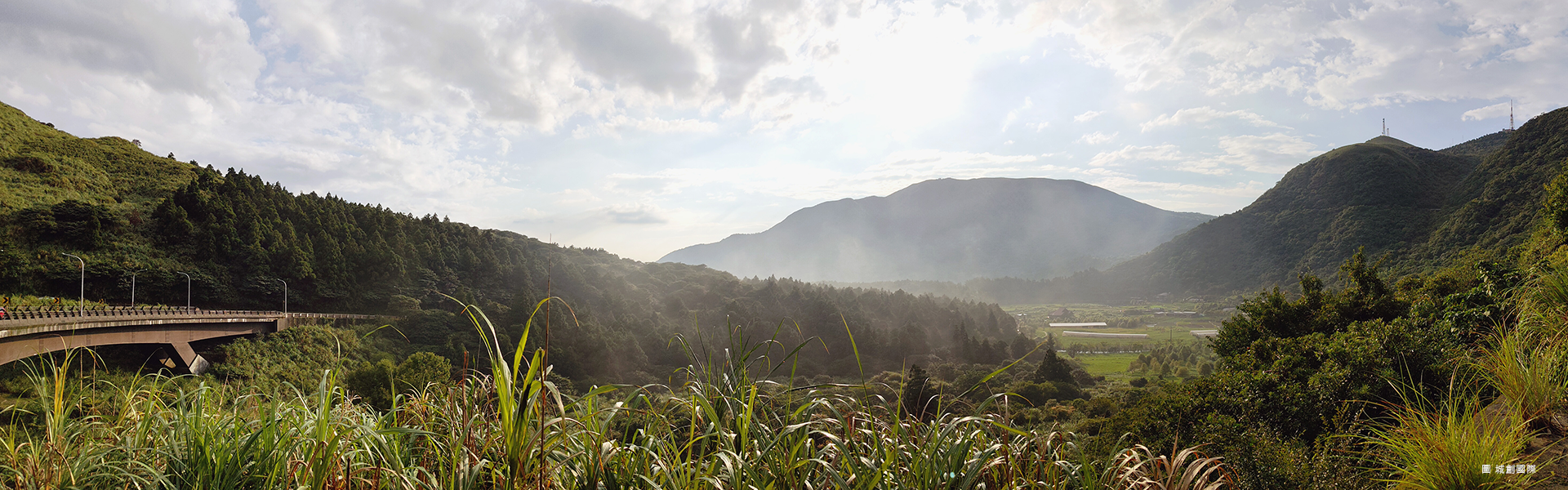
The Tatun Volcano Group (TVG) is the largest volcanic field in northern Taiwan and one of the country's most closely monitored volcanic systems. Located immediately north of the Taipei metropolitan area, the volcanic complex consists of numerous volcanic edifices, active fumaroles, hydrothermal systems, and evidence of recent volcanic activity. Ongoing geological, geochemical, and geophysical studies indicate that the TVG remains an active volcanic system and continues to be a major focus of volcanic research and monitoring in Taiwan.

Tectonic Setting

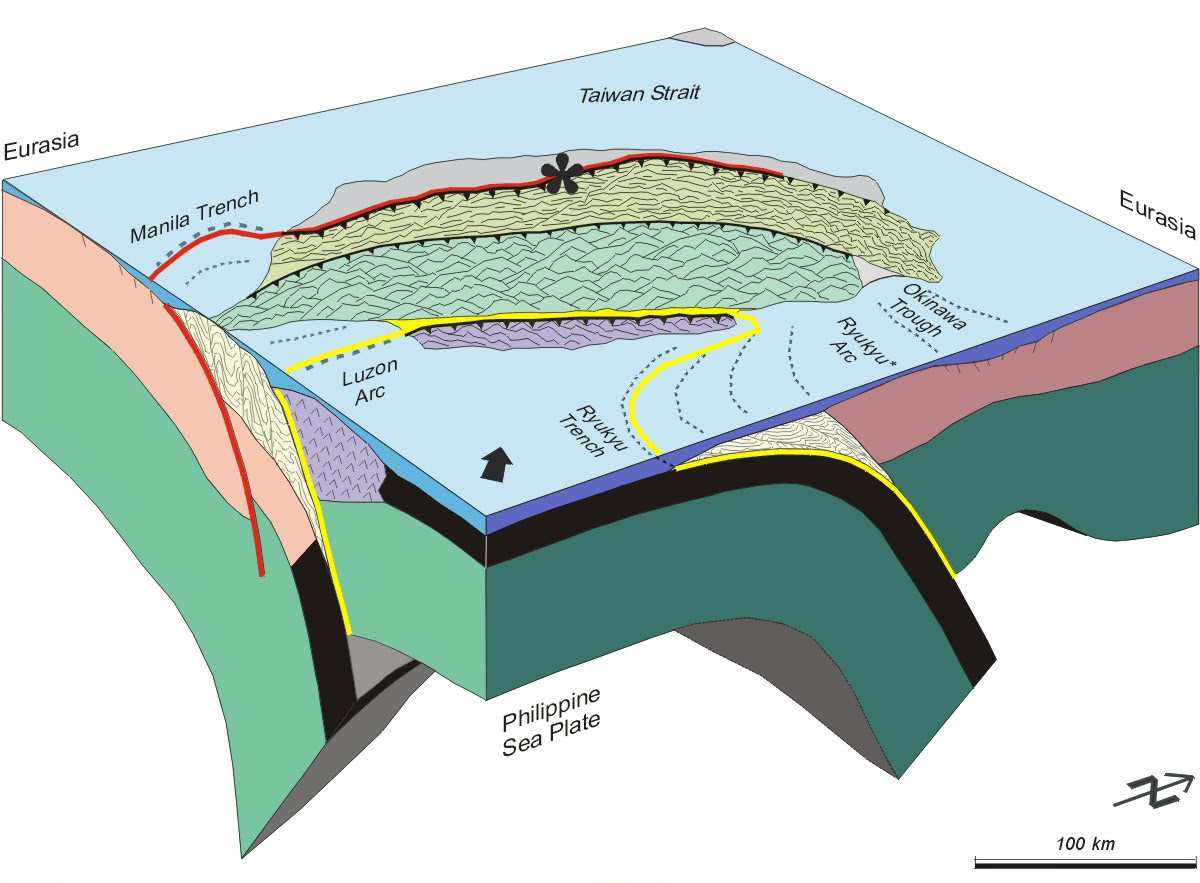
The Tatun Volcano Group (TVG) is located in northern Taiwan, within the complex tectonic zone where the Eurasian Plate interacts with the Philippine Sea Plate. The volcanic system developed in a post-collisional extensional environment associated with the opening of the Okinawa Trough, a back-arc basin of the southern Ryukyu Arc. These tectonic processes have played a key role in magma generation and the development of volcanic activity in northern Taiwan.
Geological History
Source: Angelier J., 1986

Geological History

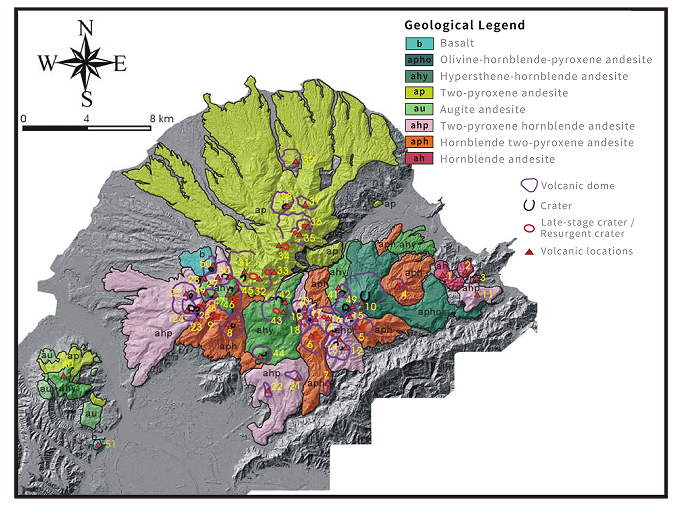
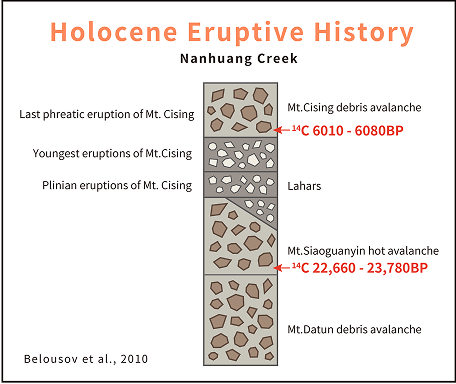
The Tatun Volcano Group consists of numerous volcanic edifices formed during multiple episodes of volcanism. Geological mapping reveals the distribution of volcanic units, including andesitic lava flows, pyroclastic deposits, and volcanic centers, reflecting the complex evolution of the volcanic field (Chen et al., 2007). Most volcanic activity occurred between approximately 800,000 and 200,000 years ago. Geological evidence further indicates that volcanism persisted into the Holocene, with the most recent eruption estimated to have occurred about 5,000–6,000 years ago (Belousov et al., 2010).
Geological History
Geological map of the Tatun Volcano Group showing the distribution of volcanic units, volcanic edifices, and volcanic craters. Adapted from Chen et al. (2007).

Why Is the Tatun Volcano Group Considered Active?

The Tatun Volcano Group is classified as an active volcanic system based on multiple lines of geological, geochemical, and geophysical evidence.

✦ Holocene Eruptive History

The most recent eruption occurred during the Holocene Epoch, a commonly used criterion for classifying volcanoes as active.
Holocene Eruptive History

✦ Geochemical Indicators
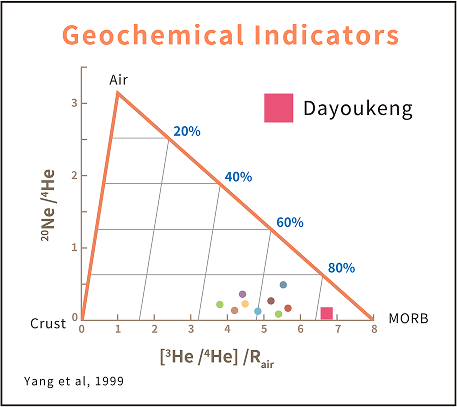
The region exhibits persistent fumarolic activity, active hydrothermal systems, and elevated ³He/⁴He isotope ratios, all of which indicate an ongoing magmatic influence beneath the volcanic area.
Geochemical Indicators

✦ Geophysical Evidence
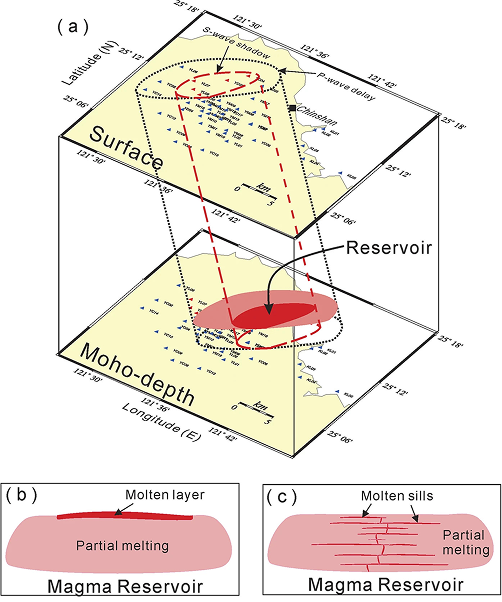
Recent seismic and tomographic studies have identified a magma reservoir beneath northern Taiwan, providing strong evidence for the presence of an active magmatic system. Given its proximity to the Taipei metropolitan area-only 10-20 km away-continuous monitoring is essential for hazard assessment, early warning, and risk reduction.
Geophysical Evidence
Lin, CH. Evidence for a magma reservoir beneath the Taipei metropolis of Taiwan from both S-wave shadows and P-wave delays.Sci Rep6, 39500 (2016).

Taiwan Volcano Observatory-Tatun(TVO)

National Center for Research on Earthquake Engineering (NCREE)

National Institutes of Applied Research

No. 85, Ln. 101, Jingshan Rd., Shilin District, Taipei City 111, Taiwan+886 2-2861-2283tvo@niar.org.tw

Copyright © 2026 Taiwan Volcano Observatory - Tatun. All Rights Reserved.